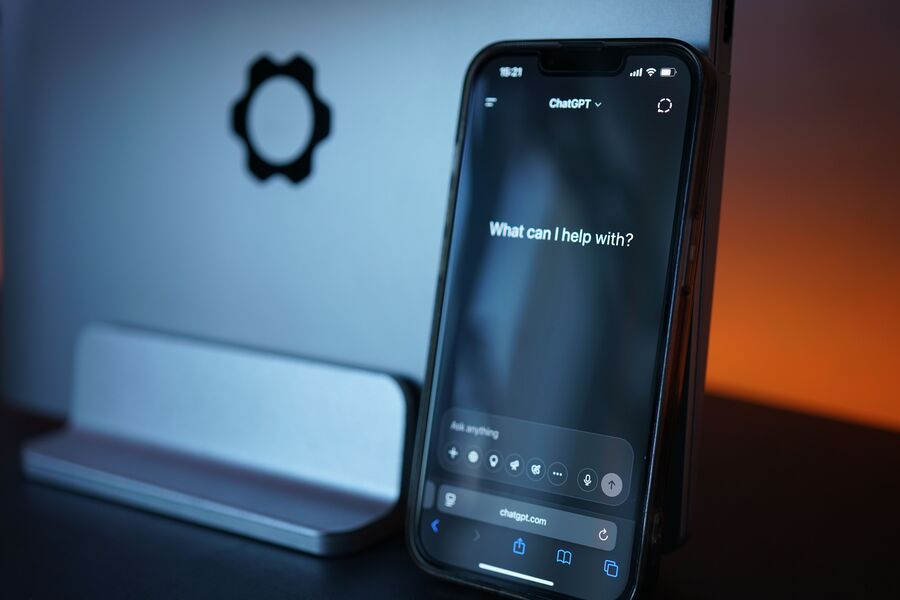
ChatGPT's share of the AI chatbot market fell below 50 percent for the first time this year, according to data TechCrunch reported in June 2026. Millions of people are now testing other assistants for coding, research, and daily writing. If you have only ever opened ChatGPT, six other tools already do specific jobs better, from summarizing long contracts to answering questions with live citations.
Why ChatGPT Is Losing Its Lead
OpenAI's assistant still leads the market with more than 1.1 billion monthly users and 900 million weekly users as of February 2026. But its share of the AI assistant market dropped to 46.4 percent by the end of May, down from more than half in January. Google's Gemini climbed to 27.7 percent over the same period, and Anthropic's Claude reached 10.3 percent, while Grok, Perplexity, DeepSeek and Meta AI each held under 5 percent.
Part of the shift comes down to trust, not just features. OpenAI's contract with the U.S. Department of Defense in February triggered a measurable spike in ChatGPT uninstalls, based on findings from Sensor Tower's State of AI Report as covered by TechCrunch. Spending on AI apps is climbing fast too, with users on pace to spend over $4.2 billion in the first half of 2026, more than double the $1.83 billion spent in the same period a year earlier. People are not just trying new assistants, they are paying for the ones that fit their work.
6 ChatGPT Alternatives Worth Trying in 2026
1. Google Gemini - Best for Summarizing Long Documents
Gemini is built directly into Gmail, Docs, and Sheets, which makes it a natural pick for anyone who needs to condense long contracts, reports, or email threads without leaving their existing workflow. Its large context window lets it hold an entire lengthy document in memory at once, so it can pull out obligations, deadlines, and key terms in a single pass instead of requiring the file to be split into chunks.
2. Anthropic Claude - Best for Careful Reasoning and Coding
Claude has built a following among developers and writers who need longer, more consistent output. It tends to stay on topic across extended conversations and is often praised for producing code that needs fewer follow-up corrections, which is why many teams now run it alongside or instead of ChatGPT for technical work.
3. Perplexity - Best for Questions That Need Live Citations
Instead of answering purely from memory, Perplexity searches the web in real time and attaches links to the sources behind its answers. That makes it a better fit for research questions, current events, or anything where you want to check a claim yourself rather than take a chatbot's word for it.
4. Grok - Best for Real-Time Conversation About Trending Topics
Built by xAI and woven directly into X, Grok has direct access to the platform's real-time posts, giving it an edge when someone wants a quick read on a breaking story or a trending topic as it unfolds, rather than a summary written after the fact.
5. DeepSeek - Best for Budget-Conscious Coding and Math
DeepSeek's models are open-source and inexpensive to run, and they have earned a following among developers who want strong performance on coding and math problems without paying for a premium subscription.
6. Meta AI - Best for Quick Tasks Inside Apps You Already Use
Meta AI is built into WhatsApp, Instagram, and Facebook, so it is often the fastest option for quick questions, image generation, or captions without opening a separate app. It is less suited to long documents but convenient for everyday, in-the-moment tasks.
None of this means ChatGPT is going away. It still has the largest user base by far, and for many people it remains the default choice. But the numbers show the assistant market is no longer a one-tool market, and trying an alternative for the tasks it handles best costs nothing but a few minutes.